HyphaWolf™
AgricultureReplaces synthetic fungicides. UF-tested by Dr. Braham Dhillon. Field and post-harvest. Zero restricted-entry interval. Packhouse-safe during active operations.
65%Tomato Botrytis ↓
45%Grape Botrytis ↓
0 REIZero re-entry
These problems exist because the chemistries that could solve them are too toxic to use where they're needed — copper sulfate is illegal in drinking-water reservoirs, synthetic fungicides shut down active packhouses, "green" cleaners off-gas into the breathing zone. Bioferment Technologies is the world's first fully fermented chemistry platform. Match or exceed the efficacy of toxic chemistry — with safety it could never have. Seven products. Four industries. Validated by the University of Florida.
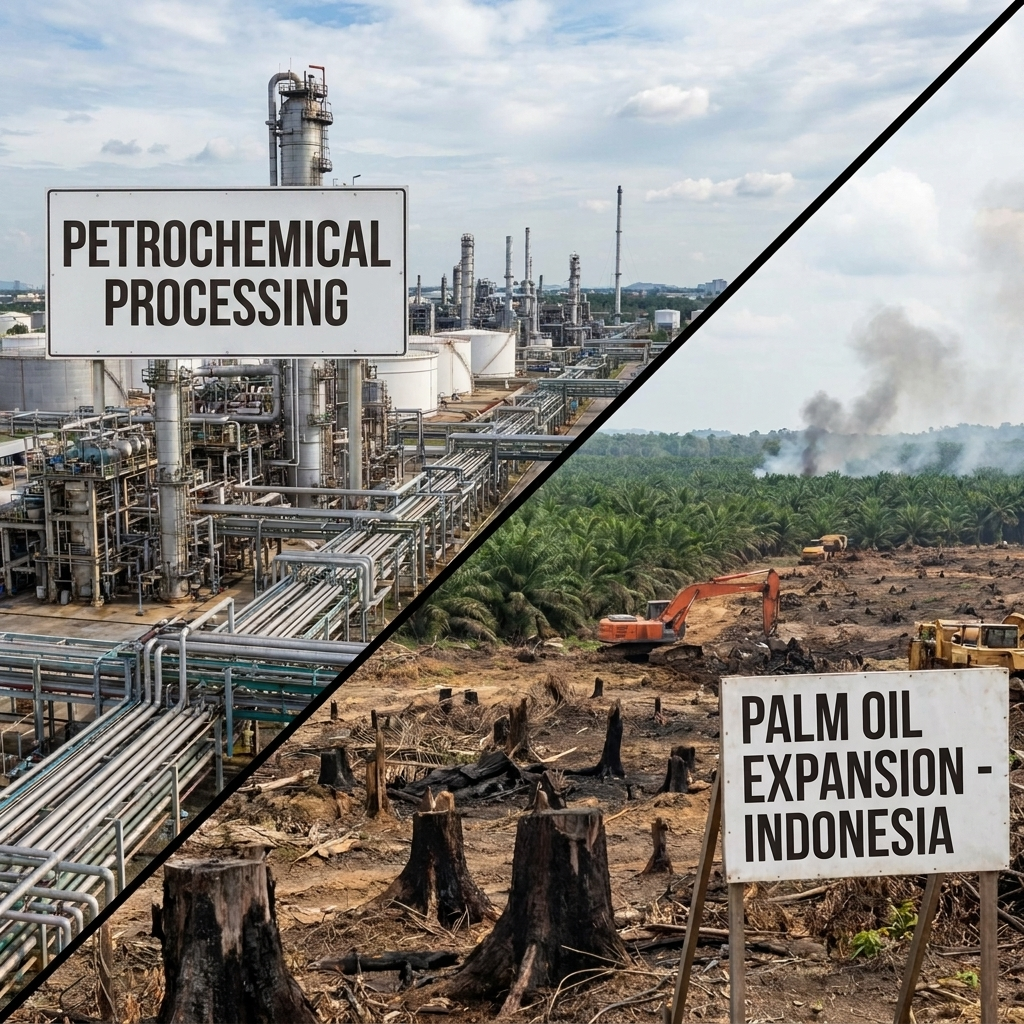
Copper sulfate kills cyanobacteria — and is illegal in drinking-water reservoirs. Synthetic fungicides control disease — and shut down active packhouses for 12–48 hours. Quats kill pathogens — and can't go on food-contact surfaces. The most effective tools in the industry can't legally go where the problem is.
The chemical industry hasn't truly innovated since the 1950s. Every "advance" since has been petrochemical reformulation — the same molecule in different packaging — or plant-based greenwashing. Neither one is safe enough to reach the problem.
Match or exceed the efficacy of toxic chemistry — with safety it could never have.
Every Bioferment product is grown via patented fermentation from food-grade inputs. Safe enough to apply where copper sulfate, synthetic fungicides, and quats are not allowed. Validated by the University of Florida.
Traditional chemistry starts with petroleum and dilutes it toward safer. That starting point caps the outcome — there's only so much you can do with what was dangerous to begin with.
Bioferment starts at the opposite end. Eight food-grade GRAS inputs — the same compounds in kombucha, sourdough, and yogurt — fermented under a patent-pending process into targeted biosurfactants, organic acids, and bioactive compounds. The output matches or beats the petrochemical incumbent at the same job.
Each product is a biological replacement for a toxic chemistry industries currently depend on — and engineered to work where that toxic chemistry isn't allowed. Same efficacy. Fundamentally different safety profile.
Replaces synthetic fungicides. UF-tested by Dr. Braham Dhillon. Field and post-harvest. Zero restricted-entry interval. Packhouse-safe during active operations.
Replaces copper sulfate. 100% cyanobacteria cell kill in 24 hours, verified by UF cell-count testing. Targets M. wesenbergii and M. aeruginosa. Up to 65% microcystin reduction at high application.
Replaces alum and lanthanum phosphate treatments. Binds dissolved phosphorus upstream — stopping the bloom at its source. 1,600×–5,000× safety margin below Daphnia no-effect levels.
Replaces quats, phenols, chlorine, and palm-oil "green" cleaners. Three SKUs replace 40+ chemical products. 95.64% efficacy (Dell Tech ASTM D4488-A5). Green Seal® GS-37 certified.
Every number on this page links to a named lab, a named PI, a report ID, and a dated document. No marketing claims.
"Within 24 hours, medium and high application rates of BloomWolf™ basically killed almost all the cells. No need to run the 72-hour time point."
Principal investigator on the HyphaWolf inoculation study. 65% Botrytis reduction on tomatoes, 45% on grapes. Post-harvest: lower fungal incidence than control and benchmarked comparator.
Co-investigator on BloomWolf cell-count testing. Co-author of the 2022 Water paper on M. wesenbergii / M. aeruginosa control that anchors the BloomWolf thesis.
Fungicides are getting EPA-restricted faster than new chemistry gets approved. Growers without a non-chemical platform in rotation will hit a wall — in the next 5–10 years, probably sooner.
Copper sulfate kills the algae AND the ecosystem. It can't be used in drinking-water reservoirs. Every reactive treatment is a bloom that already cost you something.
Half the "green" products on your shelf are repackaged from the same three companies that sell the toxic ones. The other half are palm-oil derivatives. Procurement is paying for what the label claims, not what's in the bottle.
The cleaning chemistry category has been immune to disruption because the incumbents own both the "toxic" and the "green" shelves. Bioferment is the first credible third option — with IP, university validation, and four product lines already revenue-generating.
The EPA is restricting active ingredients faster than new chemistry gets approved. Growers without a non-chemical platform will hit a wall in 5–10 years.
HAB events are accelerating. The reputational and economic cost of a cyanotoxin incident compounds every year you stay on legacy chemistry.
The generation buying off your shelves reads labels. The building still cleaning with phthalates looks dated against the one that doesn't.
The chemical incumbents don't have a plan for what comes next. They have a plan for milking the greenwashing cycle for another decade.
The post-toxic era starts with whoever chooses it first.
Three steps. Scope a 30-minute call with the science team. Trial plan and samples ship within five days. Integration in your operation, supported until it's in production.
Quarterly email. Peer-reviewed publications, trial results, regulatory developments. Written by and for technical professionals.